


On The Way: The Daily Zen Journal
Notes on Meditation
Nyogen Senzaki (1876-1958)
Although the word “Zen” is derived from the Chinese transliteration of the Sanskrit dhyana, it is not the same as dhyana. Daito once said, “One may pass hours sitting in contemplation, but if he has no Zen, he is not my disciple.”
On another occasion, a student came to Kwan-Zan to receive personal guidance. Kwan-Zan asked him where he had studied Zen and under which master. When the student replied that he had studied under Jakushitsu of Yoken Monastery, Kwan Zan said, “Show me what you have learned.” The student’s answer was to sit cross-legged in silence, whereupon Kwan-Zan shouted, “My monastery has too many stone Buddhas. We need no more. Get out, you good-for-nothing!”
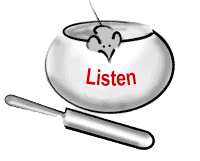
Zen uses meditation as a means of entering Samadhi, but it does not deny the existence of other methods; however, it does insist that what is gained by the practice of Zazen must be applied practically in everyday life. The teachings of Zen warn constantly of falling into the trap of “quietism.”
When one devotes oneself to meditation, mental burdens, unnecessary worries, and wandering thoughts drop off one by one; life seems to run smoothly and pleasantly. A student may now depend on intuition to make decisions. As one acts on intuition, second thought, with its dualism, doubt, and hesitation, does not arise.
Consciousness is not an entity ruling the movements of the mind, but a focus of mental powers. When mental activities cease working in meditation, there is no focus. But the moment the five senses begin to work, the consciousness is alerted. It is precisely the same as when a person awakes from sleep.
Sometimes beginners in meditation speak about their dreams as though there was some connection between Zen realization and dreaming. Dreams, however, are a psychological phenomenon and have nothing to do with Zen.
Koan
A koan is a problem given by a teacher to a student for a solution. The student must solve it primarily alone, although a teacher will occasionally give some help. To work on a koan, you must be eager to solve it; to solve a koan, you must face it without thinking of it.
The more you pound it in cognition, the more difficult it will be to obtain a solution. Two hands brought together produce a sound. What is the sound of one hand? This is a koan. If you think that there is no such sound, you are mistaken.
A Zen koan is nothing but nonsense to outsiders, but for a student of Zen, it is a gate to enlightenment. Intellectual gymnastics, no matter how superior or refined, could never solve a koan; in fact, a koan is given to force the student beyond intellect.
Do not work on more than one koan at a time, and do not discuss a koan with any person other than your teacher. Just face the question without thinking about anything else. Without neglecting everyday duties, your every leisure moment should be spent exercising the mind with a koan.
Each koan is an expression of a person’s actual experience, directly from personal attainment. When you reach the same stage, you will express the same thing. Unless you attain realization for yourself, it is useless for philosophers or spiritual leaders to talk about noumenon, oneness, the absolute, God within you, or any other empty name, which will only serve to lead you astray.
Unless you have faith in being enlightened in this life, you had better not study Zen at all. There are plenty of sects promising enlightenment after death.
Before you enter one of the gates of Zen, you must strip yourself of egoistic ideas. If you think you can reason out the final truth with your brain, why do you not do it? Once you begin your work in Zen, do not turn to the left nor to the right but keep going straight ahead.
Nyogen Senzaki (1876-1958)
excerpted from Buddhism and Zen by Nyogen Senzaki and Ruth Strout McCandless 1953

Buddha Shakyamuni attained Buddhahood through his own efforts and declared that it was possible for anyone to do the same. By your own efforts, you must find the inner treasure and see it for yourself.
How much of what we know has been discovered firsthand by us? If you are honest, most of what we know has been handed down by others and rarely questioned. Even the traditional teacher/student relationship often engenders passivity; like baby birds with beaks open, we wait for the next tidbit of understanding to arrive.
How many encourage us to question things for ourselves? How many of us even know how to step back and see clearly?
Master Ekido made three vows for himself; he probably had the discipline to follow through with them. They are wonderful, but they were his vows. It was his practice that he had the discipline to come up with and see through. What challenges have we raised for ourselves?
The aspiration for perfection must be accomplished by self-discipline.
It is up to each of us to come up with a way that works for us; something more than merely following well-worn paths others have prescribed. Even if we choose to train with a teacher, we must keep our lights on. No going to sleep in spiritual practice, meditation, or at the wheel of life.
There are many hints at what has helped others accomplish this goal of enlightenment, but what is going to be our key? What have we committed to on our own? What koan have we come up with for ourselves, our life koan? These are questions that take time and reflection to answer. And no better time than the present.
May our minds be clear!
Elana, Scribe for Daily Zen